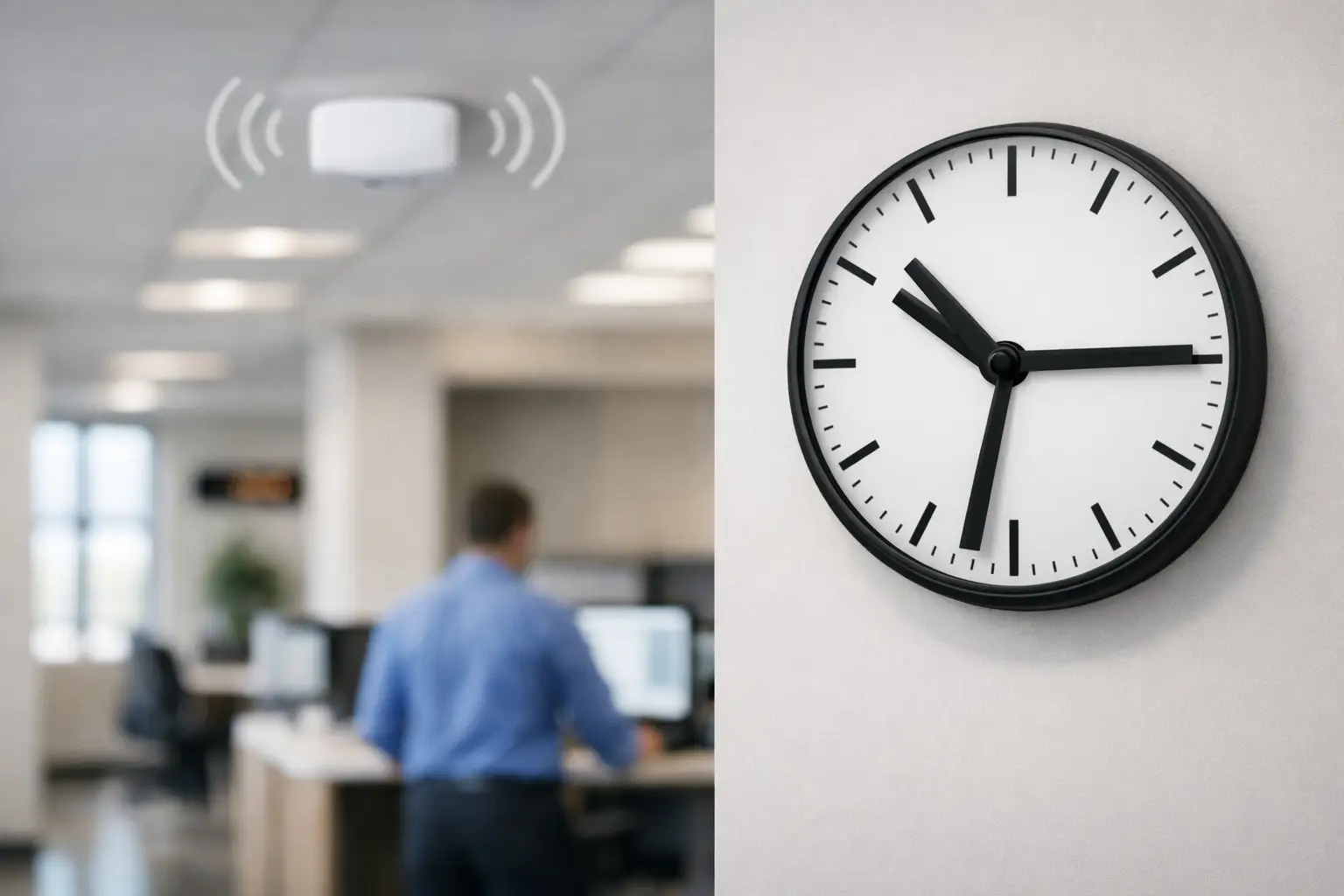
Transport Station Clocks That Keep Sites Running

Missed departures, platform confusion and conflicting time displays create problems quickly in busy public environments. Transport station clocks are not a finishing touch – they are operational infrastructure that supports punctuality, passenger confidence and staff coordination throughout the day.

For buyers responsible for stations, interchanges and transport-linked buildings, the challenge is rarely whether clocks are needed. It is choosing a system that remains visible in difficult lighting, stays accurate across multiple areas and suits the realities of the site. A small staffed ticket hall has different requirements from a multi-platform rail station, a bus depot or a ferry terminal exposed to harsher conditions.

Why transport station clocks matter

In transport settings, time has a direct effect on movement, safety and service perception. When clocks are easy to read and synchronised across the site, passengers can make decisions faster and staff can work to a common reference point. That reduces avoidable queries, supports dispatch routines and helps present the station as organised and well managed.

The opposite is also true. If one clock in the concourse differs from another on the platform, people notice. Drivers, dispatch staff, cleaning teams and security personnel may all be working to different assumptions. Even where timetable data is shown digitally, a clear station clock still has value. It gives an immediate visual reference without requiring passengers to interpret screens, announcements or app notifications.

That matters even more during disruption. When services are delayed or platforms change, passengers look for simple, trusted information. Accurate clocks help anchor that experience. They do not solve service disruption, but they help reduce uncertainty around it.

What good transport station clocks need to do

The first requirement is visibility. In transport environments, clocks are often viewed at a distance, at an angle or in bright daylight. Some are read from crowded platforms, others from open forecourts or enclosed waiting areas with mixed lighting. That means the dial design, hand contrast, numeral style and case size all need proper consideration. A clock that looks adequate on a specification sheet can prove difficult to read once installed above a platform canopy or across a busy concourse.

Durability is equally important. Stations are not gentle environments. Equipment may be exposed to vibration, dust, moisture, temperature variation and heavy public use. External clocks require suitable weather protection, while internal clocks still need cases and materials that withstand daily operational wear. In some locations, anti-vandal construction is a sensible part of the specification rather than an upgrade.

Accuracy across the whole estate is the third essential factor. Standalone battery clocks may suit a small ancillary office, but public-facing station areas usually benefit from synchronisation. Once clocks are spread across entrances, ticket halls, platforms, staff rooms and operational offices, inconsistency becomes a real risk unless the system is designed to manage time centrally.

Choosing between standalone and synchronised systems

The right answer depends on the site.

For smaller transport buildings with limited clock positions, standalone quartz clocks can still be a practical choice. They are simple to install and cost-effective where there is no requirement for site-wide synchronisation. The trade-off is maintenance and consistency. Batteries need replacing, individual clocks can drift and daylight saving changes must be managed clock by clock unless the model handles them automatically.

For larger stations or multi-zone transport facilities, synchronised clock systems are usually the stronger long-term option. A synchronised system ensures every connected clock shows the same time. That is particularly useful where operations rely on shared timing between public areas and back-of-house teams.

Wired, wireless, WiFi or PoE?

This is where specification becomes more site-specific.

Wired systems can be highly reliable in new-build or major refurbishment projects where cable routes are available from the outset. They are often preferred where infrastructure is being planned holistically and where long-term stability is a priority. The drawback is the installation complexity in existing buildings, especially older stations where access routes may be restricted.

Wireless synchronised systems are often well suited to retrofit work. They reduce disruption, avoid extensive cabling and can support broad site coverage when properly designed. For active transport sites, that can make a significant difference to programme and installation practicality. However, wireless performance still needs assessing against the building structure and layout. Thick walls, steelwork and dispersed platform areas can affect signal planning.

WiFi clocks can be attractive where network integration is preferred and the site already has suitable infrastructure. They allow clocks to receive accurate time from the network, but they are only as effective as the underlying connectivity and IT environment. For some estates teams, that is perfectly acceptable. For others, reliance on network availability introduces another approval step and another stakeholder group.

PoE clock systems can be a strong option where data and power over a single cable offer installation efficiency. They suit certain commercial and transport projects well, particularly when integrated into a wider networked building strategy. As with WiFi, though, the decision depends on existing infrastructure, IT governance and the ability to support the system over time.

Analogue or digital display?

There is no universal winner, because the use case matters.

Analogue clocks remain a strong fit for many transport settings because they offer instant recognition at a glance. Passengers do not need to process changing digits or screen glare, and analogue faces often perform well in large public spaces when sized correctly. Double-sided analogue clocks are especially useful on platforms and in concourses where visibility is needed from more than one direction.

Digital LED clocks can be highly effective in staff-only operational areas, service corridors, depots and control points where precision and immediate legibility are the priority. They can also work well in passenger environments, particularly where a bold numeric display is needed. The decision usually comes down to viewing distance, ambient light, mounting location and whether the clock is serving the public, staff, or both.

In practice, mixed estates often benefit from both. Analogue clocks can serve principal public areas, while digital clocks support back-office operations and staff timing points. The best system is not the one that uses a single format everywhere. It is the one that matches each clock type to the environment.

Installation considerations that affect performance

Clock performance is shaped as much by placement as by specification. A high-quality clock installed in the wrong location will still disappoint.

At station level, sightlines matter. Buyers should consider where passengers pause, where queues form and where decision points occur. Entrances, booking halls, platform access routes and waiting areas all benefit from clear time visibility. Mounting height also needs care. Too low, and clocks disappear into visual clutter. Too high, and they become harder to read quickly.

External installations need extra attention to enclosure quality, fixings and exposure. Coastal transport sites, open-air bus stations and partially sheltered rail platforms may all require more resilient materials and weather-resistant construction. Maintenance access should also be considered early. A clock that is awkward to reach increases the cost and inconvenience of routine servicing.

For refurbishment projects, integration with existing services can be the deciding factor. If a station is already undergoing electrical or network works, that may create a good opportunity to install a synchronised solution that would otherwise be more disruptive later.

Specifying for public confidence and operational control

Professional buyers are often balancing more than appearance and budget. They are looking for systems that support daily performance over years, not months.

That means asking practical questions at specification stage. How many clock locations are needed now, and how many may be added later? Are the clocks public-facing, operational, or both? Is visibility required across long distances or under variable lighting? Does the site need all clocks to change automatically for daylight saving time? Is the project a retrofit or part of a wider redevelopment?

The supplier’s role should be consultative, especially in transport settings where layouts, infrastructure and operational demands vary widely from one site to another. An off-the-shelf choice may be enough for a small waiting room, but larger stations usually benefit from a more considered approach to system design, product selection and installation method.

This is where specialist experience has real value. Clock Systems Service Ltd, for example, works with commercial and institutional buyers who need systems matched to operational environments rather than generic products. In transport applications, that kind of project-led specification helps avoid under-sizing, poor visibility and unnecessary complexity.

A practical standard for buying transport station clocks

The most effective transport station clocks do three things well. They are easy to read, accurate across the site and suited to the environment they operate in. Everything else – style, mounting format, dial type, power method and system architecture – should follow those requirements.

If a clock system supports punctual movement, reduces confusion and continues performing in a demanding station environment, it is doing the job it was bought for. That is the standard worth specifying against from the start.


Warehouse Wall Clocks That Work Harder

When a picking team is working to dispatch deadlines and shift changes are happening across a large site, the wrong clock quickly becomes more than a minor annoyance. Warehouse wall clocks need to do a practical job – they must be easy to read at distance, dependable over long operating hours and suitable for demanding environments where dust, vibration and constant movement are part of the day.

For warehouse operators, facilities teams and project managers, the issue is rarely whether a clock is needed. The real question is what type of clock will hold up operationally and whether a standalone unit is enough, or a synchronised system makes better sense across the building.

Why warehouse wall clocks matter

In a warehouse, timekeeping supports workflow as much as visibility. Staff need a clear reference point for shift starts, break times, loading schedules, inbound deliveries and dispatch cut-offs. Supervisors need consistency across zones. Visitors, contractors and agency staff also benefit from obvious time displays in reception points, marshalling areas and operational spaces.

If clocks show different times in different parts of the site, problems follow. It can create disputes over lateness, confusion during shift handovers and avoidable friction between warehouse teams and transport schedules. In larger operations, even a minute or two of drift between clocks becomes noticeable because multiple processes depend on shared timing.

That is why warehouse wall clocks are often specified not just as a convenience, but as part of operational control. In some sites, a simple battery-powered clock is entirely suitable. In others, especially where there are multiple picking zones, mezzanines, goods-in and goods-out areas, synchronised timekeeping is the more reliable option.

What to look for in warehouse wall clocks

The first requirement is legibility. A warehouse clock that looks fine in a catalogue can be difficult to read once mounted high on a wall in a large open space. Dial size, numeral clarity, hand contrast and viewing distance all matter. In many warehouse settings, larger analogue clocks are chosen because they offer immediate recognition from afar, particularly where staff are moving rather than standing in one position.

LED clocks can also be highly effective, especially in areas where fast visual recognition is the priority. They are often well suited to dispatch desks, loading bays, production-adjacent warehouse spaces and locations with long sightlines. The trade-off is that the best choice depends on ambient light, mounting height and the kind of information staff need at a glance. In some spaces an analogue face is the clearest solution. In others, a bright digital display performs better.

Durability comes next. Warehouses are not delicate environments. High ceilings, fluctuating temperatures, airborne dust and occasional impact risk all influence clock selection. The casing should be appropriate for the setting, and the chosen design should cope with day-to-day operational conditions rather than simply look presentable in an office-style installation.

Power source is another practical decision. Quartz battery clocks can work well for smaller sites or individual rooms such as offices, staff areas and reception points. They are straightforward and cost-effective. The limitation is maintenance and time drift across multiple clocks. Once a site has several display points, battery changes and manual adjustments become less efficient and more prone to inconsistency.

When a synchronised system is the better choice

A single warehouse may include offices, packing stations, loading areas, welfare rooms and external circulation points. If every clock is set manually, consistency becomes difficult to maintain. This is where synchronised warehouse wall clocks offer a clear advantage.

In a synchronised system, all clocks receive the same time signal and update together. That means staff in goods-in, dispatch and management offices are all working to the same reference. For operations where timing affects labour management, vehicle scheduling or service levels, that consistency has obvious value.

There are different ways to achieve this. Wireless systems reduce cabling and can be a practical fit for existing buildings where retrofit simplicity matters. WiFi-based options may suit sites already built around networked infrastructure. PoE systems can be attractive in new-build or heavily refurbished environments where integration and controlled power distribution are part of the brief. Wired master clock systems remain relevant in some projects too, particularly where specific site standards or legacy infrastructure apply.

There is no universal answer because warehouse estates vary. A single-unit distribution site has different needs from a national operator with several buildings and controlled operational zones. The right approach depends on layout, infrastructure, budget, maintenance preferences and the importance of exact time alignment across the site.

Analogue or digital for warehouse use?

This is one of the most common specification questions, and the answer depends on how the space is used.

Analogue warehouse wall clocks are often preferred where broad visibility is the main requirement. People can interpret the time quickly from a distance, even while moving. For large open warehouse floors, packing halls and general circulation areas, this makes analogue clocks a strong option. They also suit businesses that want a clean, familiar display across both operational and front-of-house areas.

Digital clocks are more precise in presentation. They can be especially useful where exact minute visibility matters, such as dispatch control points, supervisor stations, loading offices or time-sensitive process areas. In louder, faster-paced settings, a bright LED display can be easier to catch immediately than clock hands on a dial.

Some sites use both. Large analogue clocks may be installed across the main warehouse floor, with digital displays in more task-driven zones. That mixed approach often reflects the reality of site operations better than trying to force one clock type into every location.

Installation factors that affect performance

A clock can be technically suitable and still perform poorly if it is positioned badly. Mounting height, line of sight and background contrast all influence usability. In warehouse settings, clocks are often placed too high, too close to visual clutter or in positions where racking blocks the view from key work areas.

It is worth considering how people actually move through the building. A clock above a doorway may be visible in theory but useless to staff working between aisles. Likewise, a display installed where sunlight or bright industrial lighting causes glare may not provide the legibility expected.

For larger projects, it helps to think in terms of coverage rather than units. The aim is not to install as many clocks as possible. It is to make sure the right people can see the right display in the right place, without ambiguity.

Choosing for existing buildings and new warehouse projects

Retrofitting clocks into an existing warehouse usually means working around practical constraints. Ceiling heights, existing power access, network limitations and operational downtime all affect what can be installed. In these cases, wireless or battery-supported solutions may offer a cleaner route, particularly where disruption needs to be minimised.

For new-build warehouses or major refurbishments, there is more scope to plan timekeeping as part of the wider building infrastructure. That can make synchronised systems, network-connected clocks or PoE installations more attractive. When time displays are considered early, the outcome is usually better – fewer compromised positions, cleaner installation and stronger consistency across the site.

This is also where specialist advice has real value. Commercial timekeeping is not just about selecting a clock face. It is about matching the display type and system architecture to the operating environment.

A practical approach to specification

For most buyers, the most effective starting point is not product-first but requirement-first. Think about who needs to read the clock, from how far away, under what lighting conditions and how critical time consistency is across the building. Then consider whether the site is best served by standalone clocks or a system that keeps every display aligned.

Budget matters, of course, but cheapest upfront is not always lowest cost over time. If a warehouse has multiple clocks and they repeatedly drift, require manual adjustment or fail to provide adequate visibility, the operational cost becomes larger than the purchase price suggests.

Clock Systems Service Ltd works with commercial buyers who need that balance right – visibility, durability and the correct system design for the site rather than a one-size-fits-all answer.

Warehouse wall clocks do their best work when nobody has to think about them. The time is clear, consistent and exactly where it needs to be, which is usually the strongest sign that the specification was right from the start.

Wired Clock Systems for Critical Sites

A school bell rings two minutes early in one block and right on time in another. A ward clock drifts just enough to create doubt during a handover. In a warehouse, shift change starts with three different times on three different walls. Wired clock systems are designed to remove that problem at source by keeping every connected clock aligned to one master time reference.

For commercial and institutional buyers, that matters because inaccurate time is rarely just an irritation. It affects movement of people, staff coordination, reporting, lessons, medication rounds, departures, breaks and the general credibility of a site. When time needs to be visible, dependable and consistent across multiple rooms or buildings, a synchronised system is often the right answer. The question is whether a wired approach is the right fit for your site.

What wired clock systems actually do

A wired clock system uses physical cabling to distribute accurate time signals from a master clock to a network of slave clocks. Each clock receives the same timing information, so the display remains synchronised throughout the building or campus.

That may sound straightforward, but the practical advantage is significant. Instead of relying on individual battery-powered clocks that drift at different rates and need manual correction, a wired system centralises timekeeping. If the master clock updates, the whole estate follows. For sites where consistent displayed time supports operations, that level of control is often the main reason to specify wired rather than standalone clocks.

The exact architecture varies. Some systems are built around analogue clocks in corridors, classrooms, wards or reception areas. Others combine analogue and digital displays, depending on visibility requirements. In some environments, the master clock may also interface with bells, sounders or other timed functions, although that depends on the site brief and the wider system design.

Where wired clock systems make most sense

Wired clock systems are particularly well suited to buildings where reliability and permanence matter more than installation simplicity. Hospitals, schools, transport buildings, warehouses, leisure centres and larger public estates often fall into that category.

In healthcare, a synchronised time display supports coordination across wards, theatres, treatment spaces and staff areas. In education, consistency is critical for lesson changes, exams and site-wide routine. In industrial and logistics settings, visible time supports shift management, break adherence and operational flow. Public-facing buildings also benefit because mismatched clocks undermine confidence surprisingly quickly.

That does not mean wired is always the best option. On a listed building, a live operational site with limited access routes, or a campus where cabling would be costly and disruptive, wireless or network-based alternatives may be more practical. The right choice usually depends on the age of the building, available infrastructure, programme constraints and the level of resilience required.

Why buyers still choose wired clock systems

The strongest argument for wired clock systems is stability. A hard-wired connection avoids some of the variables that can affect other technologies, such as radio signal limitations, network dependency or local battery maintenance. For many estates teams and consultants, that makes wired systems attractive in critical environments where the brief is simple: put accurate time on the wall and keep it there.

There is also a long-term maintenance advantage in the right setting. Once installed properly, a wired system can provide dependable synchronisation over many years with predictable servicing requirements. That appeals to buyers who are less interested in novelty and more interested in infrastructure that quietly does its job.

Another benefit is control. Centralised time distribution makes it easier to manage seasonal time changes and reduce manual intervention. On a larger site, that saves labour and removes the risk of some clocks being updated while others are missed.

The trade-offs buyers should understand

Wired systems are not the lightest-touch option to install. Cabling routes, containment, ceiling void access and coordination with other trades all need proper planning. In a new build or major refurbishment, that is usually manageable. In a live building, especially one with restricted access or heritage constraints, it can become the deciding factor against wired.

There is also the question of flexibility. If your layout changes regularly, or if you expect to add clocks in phases across multiple occupied areas, wireless or PoE-based systems may offer easier expansion. Wired clock systems suit environments where clock positions are known, the infrastructure can be planned, and the site values fixed, dependable installation over easy reconfiguration.

Cost should be looked at in full, not just as a headline product price. A wired system may be cost-effective over its life in the right building, but the installation element can be higher than some alternatives. Equally, a cheaper standalone approach can become expensive when maintenance, drift correction and operational inconsistency are taken into account. It depends on scale and on how critical synchronised time is to the operation.

Specifying wired clock systems properly

The success of a wired installation usually comes down to specification discipline. Buyers often start with clock type or dial size, but the better starting point is operational need. Where must time be seen from? Who relies on it? What level of synchronisation is required? Is the environment clean, humid, public-facing, secure or industrial? Those answers shape the right system.

Visibility comes first

A clock that is technically accurate but hard to read at distance is not doing its job. Dial diameter, numeral style, hand contrast and mounting position all matter. In a school corridor, the requirement may be straightforward legibility across a busy circulation space. In a warehouse or sports hall, larger formats may be needed. In healthcare, viewing angles, cleanliness and room function need more careful consideration.

Building layout matters

Single-building projects are simpler than multi-block estates, but both can be served effectively if the system is designed around the site rather than forced into a generic layout. Cable routes, risers, plant areas and phased works should be considered early. Retrofitting a wired system into an occupied site is entirely possible, but only if the installation realities are understood at the outset.

Clock type should match the environment

Not every commercial clock is suitable for every setting. A reception area may prioritise appearance alongside accuracy. A factory may need durability and high visibility. A poolside or washdown area may need specialist protection. Wired clock systems work best when the hardware is selected for the environment, not just the wiring method.

Wired vs wireless vs networked time systems

Professional buyers are often comparing three broad options: wired, wireless and networked systems such as WiFi or PoE. The right answer is not ideological. It is practical.

Wired clock systems are often preferred where reliability, fixed infrastructure and central control are priorities, particularly in new build or refurbishment projects. Wireless systems can be very effective where installation disruption needs to be reduced or where buildings make cabling difficult. Networked systems may suit organisations already working around structured cabling and IP-based building services.

The deciding factors usually come back to site conditions, maintenance strategy and risk tolerance. If a hospital refurbishment has defined service routes and a clear need for permanent synchronised time, wired may be the obvious choice. If a school needs clocks across multiple occupied buildings during term time with minimal disruption, wireless may be more attractive. If a commercial development already has the right network infrastructure and wants flexibility, PoE may deserve closer attention.

That is why consultative specification matters. The best system is not the one with the most features on paper. It is the one that suits the building, the users and the operational consequences of getting time wrong.

What to ask before you buy

Before committing to wired clock systems, it is worth testing the brief with a few practical questions. Do you need every clock to display exactly the same time, or is general consistency enough? Is the project a new installation, a refurbishment or a live retrofit? Will clocks remain in fixed locations for years, or is the space likely to be reorganised? How disruptive can installation be? And who will be responsible for ongoing management of the system?

Those questions help separate genuine operational need from assumption. They also make supplier conversations more useful. A specialist commercial supplier should be able to advise on system type, clock format, visibility, environment suitability and installation constraints without overcomplicating the decision.

For many organisations, wired clock systems remain the right answer because they are proven, dependable and well suited to operational buildings where time needs to be right everywhere, not just approximately right in most places. If the infrastructure and the site programme support them, they offer a straightforward way to bring consistency back to the wall clock – which is exactly where many timekeeping problems begin.

WiFi Clock Systems for Commercial Sites

A school corridor clock that is two minutes fast and a theatre recovery clock that is one minute slow might sound like minor faults. In practice, they create avoidable friction all day. WiFi clock systems are designed to remove that problem by keeping multiple clocks aligned to a common time source without the disruption of installing a dedicated clock wiring network.

For commercial and institutional sites, that has clear appeal. Estates teams want consistent time across departments, contractors want practical installation options, and procurement teams want a system that suits the building rather than a one-size-fits-all specification. WiFi clock systems can meet those needs well, but only when they are chosen with the environment, network setup and operational priorities in mind.

What WiFi clock systems do well

At their core, WiFi clock systems use a site’s wireless network to distribute accurate time to connected clocks. Each clock synchronises to a central time reference through the network, so displays remain consistent across classrooms, wards, reception spaces, staff areas and circulation routes.

The main advantage is flexibility. In many buildings, especially refurbishments or occupied sites, running new cables is expensive, disruptive or simply impractical. A WiFi-based system can reduce installation complexity while still delivering synchronised timekeeping across a broad estate. That is particularly useful where clocks are needed in multiple rooms, across separate floors or in buildings where fabric and access constraints make cabling difficult.

This approach also suits organisations that already rely heavily on managed networks. If WiFi coverage is stable and properly planned, clocks can be added, repositioned or expanded with less disruption than a traditional hard-wired clock system. For growing schools, healthcare estates and multi-use commercial premises, that scalability matters.

Where WiFi clock systems fit best

WiFi clock systems are often well suited to education, healthcare, offices, leisure facilities and some warehouse or transport environments. In schools and colleges, consistent bell times and lesson changes depend on clocks reading the same time in every teaching space. In hospitals and clinics, visible and accurate clocks support scheduling, record keeping and coordinated working across departments.

Office and public-facing environments benefit for different reasons. Reception areas, meeting rooms and shared workspaces need clear, professional time displays without unnecessary installation work. Leisure sites and community buildings often need clocks in changing operational layouts, where flexibility is more valuable than a fixed wired infrastructure.

That said, suitability always depends on the site. A modern building with strong wireless coverage is a different proposition from an older estate with patchy signal, network segmentation or restricted device access. The right answer is not simply whether WiFi is available, but whether it is reliable enough for the system’s purpose.

The trade-offs compared with wired and wireless alternatives

No synchronised clock system format is right for every project. WiFi has strengths, but it also comes with dependencies that buyers should consider early.

Compared with a hard-wired master clock system, WiFi can be easier to deploy in live environments and extensions. There is usually less containment work and less disruption to occupied areas. However, a wired system may still be the better choice where maximum infrastructure control is required, where networks are tightly restricted, or where a client wants complete separation from IT dependencies.

Compared with proprietary wireless clock systems, WiFi clock systems use an existing network environment rather than a dedicated radio platform. That can be an advantage where IT teams prefer a network-based approach and coverage is already established. On the other hand, proprietary wireless systems may be better suited where the client wants a self-contained time distribution setup that does not rely on the building’s WiFi performance or policies.

Power is another practical distinction. Some WiFi clocks are battery powered, while others use mains power or other supply arrangements depending on the clock type and display format. Battery operation can make installation simpler, but maintenance planning then becomes part of the specification. In high-access environments that may be acceptable. In hard-to-reach locations or estates with limited maintenance resource, power strategy deserves careful thought.

What to check before specifying WiFi clock systems

A good specification starts with the building, not the brochure. Signal coverage is the first obvious checkpoint. If clocks are going into basements, plant-adjacent corridors, sports halls, thick-walled school blocks or large circulation areas, coverage needs to be verified rather than assumed.

The second point is network policy. Many commercial buyers underestimate this. A clock may be simple hardware, but it still sits within a managed environment. IT teams may require specific SSIDs, security settings, device approvals or traffic rules. On some sites, that is straightforward. On others, it can become the main delivery constraint.

Visibility should be considered just as carefully as connectivity. A synchronised clock that cannot be read at a glance is not doing its job. Dial size, numeral style, LED character height, viewing distance and ambient lighting all matter. A classroom, ward, warehouse aisle and reception desk do not have the same legibility requirement, so clock type should reflect the actual use of the space.

It is also worth deciding how centralised the time control needs to be. Some organisations want every clock tied to a common source with minimal local intervention. Others need a mixed estate, with WiFi clocks in some areas and different synchronised formats elsewhere. This is where a consultative supplier adds value, because the best system is often a tailored combination rather than a single product category applied everywhere.

Installation realities on live sites

WiFi clock systems can reduce disruption, but they do not remove the need for planning. Installation in a live school, hospital or transport setting still requires attention to access windows, fixing surfaces, power availability, commissioning and user handover.

In healthcare settings, infection control and cleaning requirements may influence enclosure choice and mounting positions. In education, programme timing may need to avoid exams or term-time disruption. In warehouses and industrial settings, mounting height, impact risk and viewing angle become more significant than they would be in a standard office.

This is why sector experience matters. The same clock system specified for different environments may require different housings, display formats or installation methods. A supplier that understands those operational differences is more likely to deliver a system that works properly after handover, not just on the day it is fitted.

Ongoing management and maintenance

Commercial buyers are rarely looking only at capital cost. They want to know what the system will demand over time. WiFi clock systems can support straightforward centralised time synchronisation, but maintenance needs still vary according to clock type, power method and network arrangement.

Battery-powered units may reduce installation costs, but they introduce a replacement cycle that must be managed across the estate. Mains-powered displays can lower that maintenance burden, though installation may be more involved. Network changes also need to be considered. If SSIDs, passwords or security protocols are updated, the impact on connected clocks should be planned in advance.

For larger estates, standardisation helps. Using appropriate clock types by area and having a clear device management approach makes expansion and replacement simpler. That is particularly relevant for organisations operating across multiple buildings or phased refurbishments, where system consistency can save time and reduce confusion later.

Why the right supplier makes a difference

WiFi clock systems are not difficult to appreciate in principle. The challenge is choosing the right system architecture, display types and installation approach for the site. That is where specialist support matters.

A credible commercial supplier should be able to assess whether WiFi is genuinely the right route, not simply the fashionable one. In some projects, it will be the most efficient and sensible option. In others, PoE, wireless or traditional synchronised systems may offer a better fit. The difference lies in understanding the building, the operational risks and the client’s maintenance capacity.

For buyers managing schools, healthcare estates, leisure sites, warehouses or public buildings, dependable timekeeping is not an aesthetic extra. It supports order, punctuality, coordination and confidence in the working environment. Clock Systems Service Ltd works with organisations that need that level of reliability and need a system chosen on practical grounds.

If you are considering WiFi clock systems, the most useful question is not whether they are modern or convenient. It is whether they suit the realities of your site, your network and the way your teams actually work.

PoE Clock Systems for Commercial Sites

When a hospital ward, secondary school or distribution centre is running to the minute, clocks that drift apart create avoidable problems. PoE clock systems are designed to remove that issue by powering and synchronising clocks through the network, giving facilities teams a practical way to keep time consistent across a site.

For many commercial buyers, the appeal is straightforward. One cable can provide both power and data, the clocks can take time from a central source, and the system can be managed as part of the wider network infrastructure. That combination makes PoE a strong option where accuracy, neat installation and central oversight matter more than a standalone battery clock on the wall.

What PoE clock systems do well

At a basic level, PoE clock systems use Power over Ethernet to supply power to each clock while also connecting it to the network. Instead of fitting separate mains supplies or relying on regular battery changes, the installer runs Ethernet cabling to each clock position. The clock then receives power and time updates through that same connection.

In practice, this gives a site a synchronised time display across multiple rooms, corridors, reception areas and operational spaces. In schools, that can support lesson changeovers, exams and staff coordination. In healthcare settings, it helps maintain consistent visible time in treatment areas, waiting spaces and back-of-house rooms. In warehouses and transport environments, it supports shift discipline, dispatch timing and operational consistency.

The main benefit is not just accuracy for its own sake. It is the reduction of friction. If one clock is three minutes fast and another is two minutes slow, staff lose confidence in the display. People start checking phones, desktop screens or wristwatches instead. A synchronised system restores the clock as a reliable point of reference.

Why PoE clock systems suit modern buildings

PoE is often a good fit where there is already a structured cabling environment or where a project is being planned with IT and building services in mind. New-build schools, refurbished healthcare facilities, office developments and larger commercial sites can all benefit because the clock system sits neatly alongside network infrastructure rather than being treated as a separate afterthought.

That does not mean PoE is always the right answer. In older buildings, listed properties or sites where network cabling routes are difficult or expensive to install, wireless clock systems may be more practical. Equally, if the requirement is only for a handful of independent clocks in low-criticality areas, a simpler quartz solution can still be perfectly suitable.

Where PoE stands out is in managed environments. Estates teams and contractors often prefer a system with clear infrastructure logic, predictable power delivery and easier central oversight. If the building already uses PoE switches for other devices, adding clocks can be a sensible extension of that approach, provided switch capacity and network design are properly considered.

Key specification points before you buy

The right PoE clock system depends on more than choosing analogue or digital faces. Commercial buyers should start with the operational requirement. The first question is visibility. A clock in a sports hall, warehouse aisle or station concourse has very different viewing demands from one in a clinic room or office corridor.

Clock size, dial design, numeral style, LED brightness and mounting position all affect legibility. A well-synchronised clock is still the wrong clock if users cannot read it quickly from the expected distance. This is why sector-specific specification matters. High ceilings, glare, ambient light and room layout all influence what will work in practice.

The next consideration is network and power capacity. PoE clocks draw relatively modest power compared with some other devices, but switch budgets still need checking. On larger projects, port availability, VLAN configuration, network security policies and physical cable routes should be reviewed early. That is particularly relevant on NHS sites, education estates and multi-building campuses where IT governance can be strict.

Time source is another important point. Some systems reference an internal master clock, while others take time from network sources. The right choice depends on resilience requirements, the site layout and how the wider building systems are managed. In environments where time consistency has operational or audit significance, buyers should not treat this as a minor technical detail.

PoE clock systems compared with wireless and traditional wired options

Buyers often reach PoE clock systems after comparing several synchronised clock formats. That comparison is worth doing carefully because each approach has strengths and limitations.

Traditional wired synchronised systems have a long track record and can be very effective, especially where a site already has compatible infrastructure or where a specification calls for a particular master clock arrangement. They are proven and dependable, but installation can be more specialised and less flexible in some refurbishment scenarios.

Wireless systems reduce cabling demands and can be highly useful where disruption must be minimised. In schools, heritage buildings and live operational environments, that can be a major advantage. The trade-off is that radio coverage, building structure and system design all need proper attention to avoid weak spots.

PoE sits somewhere different. It offers the control and synchronisation expected from a networked system while simplifying power delivery through the same cable. For many commercial projects, that is an attractive middle ground. The caveat is that it ties the clock installation more closely to the IT environment, so collaboration between facilities, contractors and network teams is essential.

Where PoE makes the strongest business case

PoE clock systems are particularly effective on sites with many clock locations and a clear need for consistency. A single reception clock is one thing. Fifty clocks across classrooms, treatment areas, corridors and staff zones is another. As scale increases, the advantages of central synchronisation and reduced maintenance become more meaningful.

Schools and colleges are a strong example. Timetables, exams, break periods and staff movement all depend on visible common time. If clocks vary from room to room, complaints follow quickly. A synchronised PoE system can provide order without requiring battery changes across dozens of locations.

Healthcare is another. In hospitals and clinics, visible and accurate timekeeping supports patient flow, staff coordination and general professionalism. Different departments may have different environmental needs, so the clock type itself still has to be chosen carefully, but synchronisation is rarely optional.

Industrial and logistics settings also benefit. Shift start times, pick operations, loading schedules and dispatch windows all work better when staff can trust the wall clock at a glance. In these spaces, durability and viewing distance are often as important as the synchronisation method.

Installation and maintenance realities

No clock system is maintenance-free, and buyers should be wary of any specification that suggests otherwise. PoE can reduce some routine maintenance because there are no batteries to replace at each clock, but the system still depends on sound installation, suitable switches, correct configuration and reliable network operation.

Clock location matters during installation. Poor placement can create visibility issues that no amount of technical accuracy will fix. Equally, cable routes need practical planning. On busy sites, installation access, working hours, ceiling types and compliance requirements can all affect programme and cost.

Maintenance planning should also include who owns the system once installed. On some sites that will sit mainly with estates, on others with IT, and on larger projects with a mix of both. Clarity at the outset avoids the common problem of clocks being installed successfully but lacking clear long-term responsibility.

Choosing a supplier for PoE clock systems

A commercial clock project is rarely just a product purchase. It is usually a specification exercise shaped by building type, user needs, installation constraints and long-term support expectations. That is why experience in operational environments matters.

A suitable supplier should be able to advise on visibility, mounting, sector-specific requirements, synchronisation options and the practical differences between PoE, wireless and other system formats. They should also be comfortable speaking to both technical and non-technical stakeholders, because clock projects often involve procurement, estates, contractors and IT teams at the same time.

Clock Systems Service Ltd works in exactly that space, supplying commercial and synchronised time systems for organisations that need dependable, fit-for-purpose solutions rather than generic products.

If you are considering PoE for a live project, the best starting point is not the catalogue page. It is the site requirement. How many clocks are needed, who relies on them, what must be visible from where, and how will the building support installation and ongoing management? Get those answers right first, and the right system usually becomes much clearer.

Choosing the Right Commercial Analogue Clock

A commercial analogue clock is often specified late in a project, yet it affects daily operations long after the fit-out team has left site. When time is used to manage lessons, clinic appointments, shift changes, departures or production flow, the clock on the wall stops being a finishing touch and becomes part of how the building runs.

That is why commercial buyers tend to ask different questions from domestic buyers. The issue is not whether a clock looks good in reception. It is whether staff and visitors can read it instantly, whether every room shows the same time, whether the casing will suit the environment, and whether the chosen system will still make sense when the estate expands.

What makes a commercial analogue clock different?

At a glance, an analogue wall clock for a workplace may appear straightforward. In practice, commercial specification is driven by visibility, durability, consistency and integration. A clock in a classroom, ward, corridor or warehouse has to perform reliably across long hours, changing light conditions and constant public use.

The most obvious difference is legibility. Dial size, hand design, numeral style and contrast all matter more in a commercial setting because the viewing distance is usually greater. A clock that is perfectly readable in a small office may be inadequate in a sports hall, concourse or open-plan operational area.

Build quality also carries more weight. Commercial environments can involve higher footfall, stricter cleaning regimes, dust, moisture or temperature variation. In some sectors, a lightweight decorative product is simply the wrong tool for the job. Buyers need a clock built for the actual conditions on site, not just for occasional wall display.

The third distinction is system suitability. Many organisations do not need a stand-alone clock at all. They need a coordinated time display solution across multiple rooms or buildings. In those cases, the analogue clock is one part of a wider system that may involve wireless, WiFi, PoE or other synchronised infrastructure.

Where a commercial analogue clock works best

Analogue displays remain a practical choice in many operational settings because they communicate time quickly and universally. People read them at a glance, and in public-facing environments they are often familiar and unobtrusive.

Schools and colleges

In education, visibility and consistency are the main priorities. A pupil looking up from the back of a classroom should be able to read the time immediately. Across a larger campus, synchronised analogue clocks help maintain order between teaching spaces, offices, sports areas and circulation zones. Even small time differences between rooms can create friction around timetables and changeovers.

Hospitals and healthcare settings

Healthcare environments place a premium on accurate and consistent time. Staff coordination, appointments and routine observations all depend on it. Here, the specification often goes beyond dial size and includes hygiene considerations, case materials and suitability for wards, treatment rooms, waiting areas and staff-only spaces.

Warehouses and industrial sites

In warehouses and industrial environments, the challenge is usually distance and lighting. Large, high-contrast analogue clocks can work well where teams need a quick visual reference without stopping to consult a handset or workstation. If there are multiple zones, synchronisation becomes important so break times, dispatch activity and shift handovers stay aligned.

Leisure, transport and public buildings

Public buildings need clocks that are immediately readable to visitors who may be unfamiliar with the layout. In leisure centres, transport settings and civic spaces, durability and viewing distance often matter as much as appearance. The right analogue clock can provide a professional, dependable visual cue without drawing unnecessary attention to itself.

How to specify the right commercial analogue clock

The best specification starts with use case, not catalogue preference. A buyer who begins with finish and price may still get a working clock, but not necessarily the right one for the building.

First, consider viewing distance. The dial must be large enough to be read from the furthest realistic point, not just from directly below the wall. In long corridors, open halls or factory floors, this can push the requirement towards larger diameters or double-sided clocks.

Next, look at contrast and hand design. Clear black-on-white faces remain popular because they work. In some settings, a more specialised dial may be appropriate, but readability should stay ahead of decorative styling. Thin hands, low-contrast numerals or reflective covers can all reduce usefulness in practice.

Then assess the environment itself. A front-of-house meeting room, a swimming poolside area and a clinical room do not place the same demands on the product. Moisture resistance, cleanability, impact resistance and casing material all need to match the location.

Power and maintenance also matter. Battery quartz clocks may suit many straightforward installations, especially where a single room or small number of spaces need independent time display. For larger estates, however, battery replacement programmes and time drift between units can become an avoidable burden.

Stand-alone or synchronised?

This is the decision that usually has the biggest long-term impact. A stand-alone commercial analogue clock can be entirely suitable where there are only a few clocks and no operational need for exact matching time across site. It offers a simple, cost-effective solution with minimal infrastructure.

Once a site becomes larger or more operationally sensitive, synchronisation tends to become the better route. In schools, hospitals, transport settings and larger commercial buildings, consistent time across every clock helps avoid confusion and supports routine, safety and accountability.

When stand-alone clocks make sense

If you are fitting out a small office, adding time display to a limited number of rooms or replacing existing clocks one by one, a quartz model may be the practical option. The lower initial cost and simpler installation can be attractive, particularly where the consequences of minor variation between clocks are low.

When synchronised systems are the better investment

If your building relies on coordinated movement, timed processes or shared schedules, independent clocks can quickly become a weakness. Wireless, WiFi and PoE-based systems allow analogue clocks to stay aligned across a wider estate and reduce the ongoing task of manual adjustment. The right approach depends on the building, the network environment and the level of control required.

This is where a consultative supplier adds value. The question is not which technology sounds most advanced. It is which one best fits the project constraints, the building fabric and the operational requirement.

Common mistakes buyers make

The most common mistake is under-specifying for visibility. Buyers sometimes choose a dial based on wall space rather than reading distance, only to find that staff in the room still cannot read it clearly.

Another issue is treating all environments the same. A clock that works perfectly in an office may fail in a humid leisure setting or a demanding healthcare environment. Suitability should always be judged against the room, not the product category alone.

There is also a tendency to focus only on unit cost. For a single clock, that may be reasonable. Across a site, though, maintenance time, battery replacement, inconsistency and future expansion can make the cheapest option less economical over time.

Finally, some projects leave clock decisions too late. By that stage, cable routes, mounting positions and network considerations may already be fixed. Early planning gives far better control over both performance and cost.

Why sector experience matters

Commercial timekeeping is rarely just about supplying a clock. It is about matching display type, system architecture and installation method to the site. That requires experience with real buildings and real operational pressures.

A school business leader may need a straightforward answer on how to keep every teaching space aligned. An estates team in healthcare may need clocks that are visible, durable and suitable for specific rooms. A contractor may need a clock package that fits programme deadlines and existing infrastructure. Those are different problems, even when the product on the wall looks similar.

That is why specialist suppliers such as Clock Systems Service Ltd work from operational requirement backwards. The right commercial analogue clock is the one that suits the estate, the users and the job it needs to do, whether that means a simple battery model or a fully synchronised networked installation.

If you are specifying clocks for a commercial or public-sector site, start with how time is used in the building. Once that is clear, the right analogue solution usually becomes much easier to identify.

How Are Clocks Synchronized in Buildings?

A school bell rings two minutes early in one block and a minute late in another. A ward clock drifts from theatre time. A warehouse shift change starts with different displays showing different minutes. That is usually the moment buyers start asking how clocks are synchronised, and whether a site needs more than standard battery clocks.

In commercial settings, clock synchronisation is not a cosmetic upgrade. It is a practical control measure. When every visible clock shows the same time, routines are easier to manage, records are cleaner, and staff and visitors are less likely to work from conflicting information. In hospitals, schools, transport environments and industrial buildings, that consistency matters.

How are clocks synchronised?

At a simple level, synchronised clocks all receive time from one trusted source rather than keeping time independently. Instead of each clock relying solely on its own internal movement, a synchronised system distributes the same time signal across a building or estate. That signal may come from a master clock, a network time server, GPS, radio time reference or a central software-controlled source.

The key principle is straightforward. One system decides the correct time, and every connected clock follows it. If the source updates automatically for daylight saving changes or minor drift corrections, every secondary display updates as well. That removes the common problem of one clock being fast, another slow and a third never adjusted after the clocks change.

The way this is achieved depends on the system design. In practice, most commercial installations fall into four broad categories: wired master clock systems, wireless clock systems, WiFi clock systems and PoE network clocks.

Master and slave clock systems

The traditional answer to how clocks are synchronised in larger buildings is the master and slave arrangement. A master clock acts as the central controller. It holds the reference time and sends timed correction impulses or digital commands to secondary clocks positioned throughout the site.

This approach has been used for many years in schools, rail environments, healthcare estates and public buildings because it is dependable and easy to understand. When designed correctly, it delivers strong consistency across multiple rooms and departments. Every connected clock follows the master, so there is no need for staff to check and adjust dozens of displays manually.

Wired systems still suit many projects, particularly where cabling routes are planned during construction or refurbishment. They can be a very strong option in sites that want dedicated infrastructure rather than relying on radio coverage or the local IT network. The trade-off is installation complexity. Retrofitting cable into an occupied building can be disruptive, and in some older sites it is simply not the most practical route.

Where wired synchronisation works well

If a project involves a new build, major fit-out or a controlled refurbishment programme, a wired master clock system can make good commercial sense. It offers predictable performance and can be integrated as part of the wider building services package. In estates where reliability takes priority over ease of retrofit, many buyers still prefer a hard-wired solution.

Wireless synchronised clock systems

Wireless systems solve a different problem. They are designed for sites that need consistent time without extensive new cabling. In this setup, a master clock or transmitter sends a time signal wirelessly to analogue or digital clocks around the building.

For many schools, leisure facilities, warehouses and existing commercial premises, this is often the most practical balance between performance and installation efficiency. The clocks remain synchronised, but the infrastructure burden is lower than with a fully wired network. That can reduce disruption, especially on live sites where access is limited and downtime is expensive.

Wireless does, however, depend on signal coverage and building conditions. Thick walls, plant areas, structural steel and complex layouts can affect performance if the system has not been specified properly. That is why survey work and sector experience matter. A straightforward classroom block is one thing; a hospital with multiple departments and challenging construction details is another.

Battery life and maintenance considerations

Many wireless clocks are battery powered, which makes installation simpler, but batteries still need to be managed. Synchronisation reduces the need for time correction visits, yet estates teams should still plan for periodic battery replacement. In the right environment, that is a very manageable task. It simply needs to be factored into lifecycle planning rather than treated as an afterthought.

WiFi clocks and network time

WiFi clock systems use the site’s network infrastructure to receive accurate time updates, often through an NTP source. This makes them attractive for organisations already comfortable managing connected devices across a secure IT environment. Instead of relying on a dedicated local pulse line or radio signal, each clock checks in with the approved time source over the network.

This can work particularly well in modern commercial estates, education settings and administrative buildings where network coverage is already strong. It also gives flexibility when clocks need to be added, moved or reconfigured as spaces change.

The main consideration is network dependency. A WiFi clock is only as practical as the network it sits on. Signal strength, access policies, VLAN requirements, security rules and IT ownership all affect deployment. For some estates teams, that is entirely acceptable. For others, involving IT for every adjustment is less attractive than using a self-contained dedicated clock system.

PoE clocks in commercial environments

Power over Ethernet, or PoE, takes the network-based model a step further by providing both data and power through a single cable. A PoE clock receives time updates and electrical power via the same Ethernet connection, which removes the need for local mains power or battery replacement.

For buyers specifying new offices, healthcare areas, transport hubs or clean, modern public spaces, PoE can be a very tidy option. It is especially useful where regular maintenance access is awkward or where reducing battery management is a priority.

PoE clocks do require suitable switching infrastructure and coordinated planning with IT and electrical teams. They are rarely the right answer purely because they sound modern. They are the right answer when the building, budget and technical environment support them.

What keeps synchronised clocks accurate?

A synchronised clock system stays accurate because it references a primary time source and corrects itself routinely. That source may be an internally managed master clock, an NTP server, GPS input or another recognised time reference. The important point is not just accuracy in isolation, but consistency across every display people rely on.

That distinction matters. A single quartz clock can be reasonably accurate for everyday use, but if you install fifty of them across a site, each one will drift differently over time. The result is a building full of slightly different times. In operational environments, slightly different is often not good enough.

Automatic summer and winter time changes are another important benefit. In a synchronised system, the change is made centrally or automatically. Staff do not need to walk the site adjusting clocks one by one and hoping none are missed in corridors, waiting areas, stores, sports halls or staff rooms.

Choosing the right system for the site

The best answer to how clocks are synchronised is not always the same from one project to the next. It depends on the age and layout of the building, whether the project is a refurbishment or new build, how visible the clocks need to be, the level of IT involvement, and how critical timing is to daily operations.

In a school, the priority may be consistent lesson changeover and clear visibility across multiple blocks. In a hospital, synchronisation may support operational discipline, departmental coordination and dependable public-facing time displays. In a warehouse, large-format LED clocks may be needed so staff can read the time at distance, while the synchronisation method must suit a busy industrial environment.

This is why specification should begin with the operational requirement, not the product label. Wireless, WiFi, PoE and wired systems all have valid uses. The question is which one fits the site with the least compromise.

For buyers managing multi-room or multi-building estates, a properly designed synchronised system usually pays back in reduced manual intervention, better consistency and fewer avoidable timing errors. It also presents a more professional standard to staff, visitors, patients, pupils and the public.

Clock Systems Service Ltd works with organisations that need that level of dependability rather than a one-size-fits-all answer. The right system is the one that matches the building, the environment and the operational risk attached to getting time wrong.

If your site still relies on individual clocks keeping their own time, it is worth asking a more practical question than how synchronisation works: what does inconsistent time already cost your operation each week?

How Does Clock Synchronization Work?

A clock in reception showing 09:00 while the ward corridor shows 08:58 is not a minor detail. In a school, hospital, warehouse or transport setting, those two minutes can affect handovers, lesson changes, timed processes and public confidence. That is why buyers often ask, how does clock synchronisation work, and which type of system is right for their site?

The short answer is that synchronisation keeps every connected clock aligned to the same time source and corrects them automatically when needed. Instead of relying on each clock to keep time independently, a synchronised system distributes accurate time across a building or estate. The result is consistency, less manual intervention and far fewer disputes about which display is correct.

How does clock synchronisation work in practice?

At system level, clock synchronisation is straightforward. One accurate reference time is established, then that time is sent to all connected clocks on a regular basis. Each slave clock, or secondary clock, receives the signal and adjusts its hands or digital display to match.

The reference time can come from several places. In a traditional wired installation, it often comes from a master clock. In networked systems, it may come from an NTP server over the IT network. In some applications, the system can also use radio or satellite-referenced time sources to maintain accuracy automatically.

What matters operationally is not the source alone, but how reliably the time is distributed across the site. A well-specified system makes sure clocks in classrooms, operating departments, warehouses, sports halls, offices and public areas all show the same time, even after a power cut, daylight saving change or temporary disruption.

The main parts of a synchronised clock system

Most commercial systems have three core elements: a time source, a method of distribution and the clocks themselves.

The time source is the authority. That may be a dedicated master clock, a network time source or an external reference. The distribution method is the route the signal takes, whether that is cabling, wireless transmission, WiFi or PoE infrastructure. The clocks then act on that information, updating either continuously or at set intervals depending on the technology.

This is where specification becomes important. A small school block with a modest number of clocks may suit a very different arrangement from a hospital campus, a rail environment or a multi-bay distribution facility. The principle remains the same, but the resilience, scale and installation constraints change.

Master and secondary clocks

In many commercial environments, the classic synchronised setup is a master clock controlling secondary clocks. The master clock keeps accurate time and sends correction pulses or data signals to the rest of the system. The secondary clocks do not make independent decisions about timekeeping. They follow the master.

This approach remains relevant because it is dependable and easy to understand. It also works well where facilities teams want a dedicated time system that sits apart from the wider network.

Network-based synchronisation

In more modern estates, particularly where network infrastructure is already in place, clocks can take time from an NTP source. This is common with digital clocks and PoE clocks. Each device can receive time over the network, which reduces the need for separate timing cabling.

That said, network-based systems are not automatically the best choice for every building. They depend on the quality, availability and management of the IT environment. In some projects, estates and IT teams are closely aligned. In others, a standalone clock system is easier to procure and maintain.

Wired, wireless, WiFi and PoE – what changes?

The core question is still how the correct time reaches each clock, but the delivery method affects installation, flexibility and long-term maintenance.

A wired synchronised clock system is often chosen where reliability and permanence are the priority. In new builds or major refurbishments, cabling can be planned into the project from the outset. Wired systems are well suited to large fixed installations where clock positions are known and unlikely to change.

Wireless systems remove much of that cabling requirement. A transmitter sends time signals to clocks across the site, which can be a practical choice for existing buildings where disruption must be kept to a minimum. Schools, healthcare settings and commercial buildings often favour wireless when retrofitting synchronisation into live environments.

WiFi clocks use the site’s wireless network to obtain time data. This can be effective where there is strong and stable wireless coverage, but it does place some dependency on network design and permissions. Poor coverage, segmented networks or security restrictions can complicate deployment.

PoE clocks receive both power and time over Ethernet. For many commercial buyers, that is attractive because it can simplify installation and remove the need for separate local power supplies. PoE is especially useful where structured cabling already exists and clock locations align with the network plan.

None of these options is universally right. It depends on building layout, the number of clocks, access constraints, IT policy, refurbishment status and the level of resilience required.

How clocks stay accurate over time

A synchronised clock system does more than set the time once. It keeps correcting itself.

Analogue clocks may receive regular impulses or digital instructions that advance or adjust the hands to stay aligned. Digital clocks typically refresh their time display directly from the source at defined intervals. If a clock drifts, loses power or misses an update, the system is designed to bring it back into line.

This is particularly valuable when the clocks are spread across multiple rooms or buildings. Manual correction is not only time-consuming, but easy to miss. One unsynchronised clock in a clinical area or exam venue can create avoidable problems.

Daylight saving changes are another practical example. In a properly configured synchronised system, all clocks move forward or back together. That removes the need for staff to visit each clock individually and reduces the risk of one display being left incorrect for days or weeks.

Why synchronisation matters in operational settings

For commercial buyers, synchronisation is rarely about convenience alone. It supports coordination.

In hospitals and healthcare environments, consistent time displays support shift changes, appointments, medication timing and process discipline. In schools and colleges, they help with punctuality, exam control and the orderly movement of pupils. In warehouses and manufacturing environments, they support timed workflows, breaks, dispatch schedules and staff coordination.

Public-facing environments also benefit. A visible, accurate time display contributes to professionalism. If clocks disagree in reception, corridors and waiting areas, it signals poor control of the environment, even when the wider operation is sound.

Common issues and trade-offs

The most common mistake is treating all clock systems as interchangeable. They are not.

A battery quartz clock may be perfectly suitable in a small office or low-priority space, but it is a poor substitute for a synchronised system where timing consistency matters. Equally, a sophisticated networked solution may be unnecessary if a simpler wireless or wired system can do the job more reliably and with less dependency on third-party infrastructure.

Signal coverage, building construction and environmental conditions also matter. Thick walls, plant areas, long corridors and multiple buildings can influence wireless performance. Network policies can affect WiFi or PoE projects. In dusty, wet or high-traffic locations, durability and visibility may matter just as much as the timing method.

This is why project-led specification tends to produce better outcomes than buying clocks as a commodity item. The correct answer depends on how the building operates, not just on what appears cheapest at first glance.

Choosing the right synchronised clock system

For most buyers, the starting point is not the technology. It is the operational requirement.

Ask where accurate common time matters most, how many clocks are needed, whether the site is occupied during installation, and whether the estate includes one building or several. Consider who will maintain the system and whether the clocks need to integrate with existing infrastructure or remain independent from it.

A contractor planning a new educational building may prioritise a clean wired or PoE design from day one. An estates team upgrading an occupied healthcare site may prefer wireless clocks to reduce disruption. A warehouse operator may need large-format displays with strong visibility, not simply synchronisation on paper.

For that reason, experienced suppliers do more than provide products. They assess environment, mounting positions, viewing distances, power availability and system architecture before recommending a solution. That is usually where a dependable installation starts.

Clock Systems Service Ltd works with this kind of requirement every day across commercial and institutional environments, supplying systems designed around site use rather than a one-size-fits-all specification.

The useful question is not simply how does clock synchronisation work. It is how should it work on your site, with your constraints, and for the people who rely on it every day.

Wireless Clock Systems for Commercial Sites

A school bell goes at 10:30, but the corridor clock outside science still reads 10:27. In a warehouse, one packing zone is running three minutes fast while dispatch is two minutes slow. These sound like small issues until they start affecting movement, handovers, attendance, compliance and customer experience. Wireless clock systems are designed to remove that drift by keeping time displays aligned across a site without the disruption of extensive signal cabling.

For facilities teams, estates managers and procurement leads, the attraction is straightforward. You need accurate, highly visible timekeeping across multiple rooms or buildings, but you may not want the cost, programme impact or building disruption of a traditional wired synchronised installation. A wireless system can often provide the control benefits of synchronisation with a more practical installation route.

What wireless clock systems actually do

Wireless clock systems use a central time source and transmitter arrangement to send correction signals to slave clocks installed around a building or campus. Rather than each clock relying only on its own independent movement, the system keeps all connected clocks aligned to the same time reference.

That matters most in operational environments where consistency is not just cosmetic. In hospitals, staff handovers, clinic flow and patient-facing areas benefit from clearly synchronised displays. In schools and colleges, lesson changes, exams and break periods run more smoothly when every clock agrees. In warehouses, leisure centres and transport settings, visible and consistent time supports coordination, punctuality and public confidence.

The practical advantage is in the infrastructure. Because the clocks receive timing information wirelessly, there is generally far less installation cabling compared with a hard-wired pulse system. That can make wireless especially attractive in occupied buildings, heritage sites, extensions, refurbishments and multi-room environments where opening walls or installing containment would be disruptive.

Where wireless clock systems fit best

Wireless is often the right choice when a site needs synchronised time but does not want a major cabling project. That includes schools upgrading from independent quartz clocks, healthcare sites adding synchronised clocks into live wards and clinical spaces, and commercial estates where timelines or budgets rule out extensive rewiring.

It is also a strong option for phased projects. A site may start with one building, then extend coverage into another block later. With the right system design, that is often easier than retrofitting a conventional wired network after the fact.

That said, wireless is not automatically the answer in every building. The structure of the site matters. Thick walls, plant-heavy areas, long distances between buildings and local sources of interference can all affect signal planning. This is why system design matters as much as the clock itself. A good specification looks at coverage, mounting positions, display size, power source, environment and future expansion from the outset.

The main commercial benefits

The first benefit is consistency. When clocks across reception, corridors, classrooms, warehouses and staff areas display the same time, the building operates with less friction. People stop questioning which clock is correct and start relying on the displays.

The second is visibility. Commercial clock systems are not domestic products scaled up for office walls. In many settings, buyers need larger analogue dials or bright LED displays that can be read quickly from a distance and under varied lighting conditions. Wireless synchronisation is most effective when paired with the right clock format for the space.

The third is installation practicality. In many refurbishments, labour and access costs can outweigh hardware. Reducing signal cabling can shorten installation time and limit disruption in live environments.

The fourth is maintainability. A properly specified wireless system can simplify site-wide time management because clocks are corrected centrally rather than adjusted one by one. For estates teams overseeing multiple departments or buildings, that has obvious value.

Wireless versus wired, WiFi and PoE

Buyers often compare wireless clock systems with wired, WiFi and PoE alternatives. The right choice depends on the building, the IT environment and the operational brief.

A wired synchronised system remains a strong option where a new-build or major refurbishment already includes the necessary infrastructure. It can be highly effective, but installation is usually more involved. If cable routes are difficult or the site is already operational, costs and disruption can rise quickly.

WiFi clocks can suit organisations that want clocks to sit on the network and draw time from approved sources. However, they depend on network availability, security policies and IT approval. In some sectors, that is perfectly acceptable. In others, it creates delays or complications that facilities teams would rather avoid.

PoE clocks offer power and data through a single cable, which can work well where the network design supports it. But they still require structured cabling to each clock point, so they are not the obvious answer for every retrofit.

Wireless often sits in the middle ground. It avoids much of the cabling burden of wired and PoE systems, while also reducing dependence on local network policy compared with WiFi solutions. For many commercial sites, that balance is exactly the point.

What to consider before specifying a system

Coverage should come first. A transmitter may serve a substantial area, but no serious buyer should assume a one-size-fits-all answer. The building fabric, floor layout and distance between clock locations all affect performance. Multi-building sites may need repeaters, additional transmitters or a different system architecture.

Clock type matters just as much. An office reception may suit a clean analogue clock, while a sports hall, warehouse or rail environment may need large LED displays for fast readability at distance. In healthcare, considerations can include wipe-clean cases, second hands, quiet running or specialist locations such as theatres and treatment areas.

Power is another factor. Some wireless clocks are battery powered, which can simplify installation further. Others are mains powered, which may be preferable for larger displays or where maintenance intervals need to be managed differently. Battery operation can be ideal in certain locations, but buyers should weigh accessibility, replacement schedules and estate-wide maintenance planning.

Accuracy source is also worth clarifying. Not all systems are configured in the same way. Buyers should understand how the master clock or control unit maintains time, how daylight saving changes are handled, and what happens after a power interruption.

Finally, think beyond the current project. If the site may expand, refurbish additional areas or standardise time displays across multiple buildings later, choose a system with room to grow. Short-term purchasing can create long-term inconsistency.

Common mistakes buyers make

One common mistake is focusing only on unit price. In commercial projects, the installed cost and the operational fit are usually more important than the headline cost of a clock. A cheaper clock that is too small to read, unsuited to the environment or difficult to integrate is rarely the economical option.

Another is underestimating visibility requirements. A clock that looks adequate on a specification sheet may be ineffective once mounted in a long corridor, warehouse bay or sports facility. Dial diameter, numeral clarity, LED character height and viewing angle all need proper consideration.

A third is treating synchronisation as a nice-to-have. In many environments, it is part of operational discipline. If one department runs to a different displayed time than another, the cost shows up in delays, confusion and avoidable complaints.

The final mistake is choosing technology before defining the use case. Wireless may be ideal, but not because it is fashionable. It is ideal when it suits the building, the programme, the maintenance model and the operational need better than the alternatives.

Why supplier expertise matters

Wireless clock systems are rarely just a product drop. They work best when the supplier understands both the technical options and the realities of the site. That includes recommending the correct display type, planning for signal coverage, accounting for difficult environments and specifying equipment that fits the sector.

A school, a hospital and a distribution centre may all need synchronised time, but they do not need the same clock. Experienced commercial suppliers approach the project by use case, not by catalogue page. That is where specialist support has real value, particularly for estates teams managing live buildings or contractors coordinating wider refurbishment works.

Clock Systems Service Ltd operates in exactly that space, supplying tailored commercial clock solutions for organisations that need timekeeping to be dependable, legible and appropriate to the environment.

Wireless clock systems make sense when you need synchronised time without turning a practical installation into a building project of its own. The best results come from specifying the system around the site, the users and the operational pressure the clocks must support. Get that right, and time stops being something people question and becomes something the building can simply rely on.

Wireless Clock Systems for Schools Explained

A bell schedule only works if every corridor, classroom, hall and office is working to the same time. That is where wireless clock systems for schools earn their place. In a live education setting, even a minute of drift between buildings can create avoidable disruption – late lesson changes, staggered breaks, exam timing issues and constant complaints that one clock is wrong.

For school business leaders, estates teams and contractors, the question is rarely whether synchronised time is useful. It is whether wireless is the right system architecture for the site, the budget and the installation constraints. In many schools, the answer is yes, but not in every case.

Why schools choose wireless clock systems

A school is rarely one simple building. There may be teaching blocks of different ages, temporary classrooms, sports facilities, dining areas, reception spaces and external circulation points, all with different cabling realities. Running new cable across an occupied site can be disruptive, slow and expensive, particularly where access is limited or where listed or older buildings are involved.

Wireless clock systems reduce much of that complexity. A central master clock transmits accurate time signals to slave clocks positioned around the site, allowing the entire estate to display the same time without the need to hard-wire every clock back to a control point. For schools, that usually means faster deployment, less disturbance during installation and greater flexibility when layouts change.

That flexibility matters. Schools expand, repurpose rooms and add modular buildings. A system that can accommodate additional clocks without major rewiring is often easier to justify over the long term than one designed only for the current floorplan.

What a wireless clock system for schools actually includes

The term can be used loosely, so it helps to define it clearly. A typical wireless clock system for schools includes a master clock or controller, a means of radio transmission, and a network of synchronised analogue or digital clocks receiving the signal. Depending on the system design, it may also interface with bell or tone schedules.

The visible hardware is only part of the specification. The more important part is the system design behind it – coverage across the site, clock size for legibility, battery or mains considerations, and whether the school needs simple time synchronisation or a wider managed time solution.

For example, a primary school with one main building may need a straightforward arrangement of corridor and classroom clocks. A secondary school or college campus may need a more considered design with repeater support, larger clocks for sports halls and dining areas, and stronger attention to coverage between separate blocks.

The operational case for synchronised clocks

Schools run on timing discipline. Lessons start and finish to the minute, movement between rooms is compressed into short changeovers, and formal assessments leave little room for ambiguity. When clocks disagree, staff tend to rely on personal devices, pupils challenge timings and administration teams lose confidence in published schedules.

Synchronised clocks remove that friction. Reception, staff rooms, classrooms and communal spaces all present the same reference point. That supports punctuality, but it also supports consistency in less visible ways. Fire drills, invigilation, visitor management and transport coordination all benefit when the whole site is looking at one correct time source.

There is also a presentational benefit. A school with consistent, clearly visible time displays feels better managed. That may sound secondary, but it matters in front-of-house areas and during inspections, open evenings and parent visits.

Where wireless works especially well

Wireless systems are often well suited to occupied school environments where installation access is limited. They are a practical choice for refurbishment projects, phased upgrades and estates with a mix of newer and older buildings. They also work well where the requirement is broad time coverage rather than deep IT integration.

This is one reason they are frequently considered by schools that want to replace unsynchronised battery clocks without turning the project into a major building works package. If the aim is to standardise time across the site with less disruption, wireless can be a strong fit.

That said, site survey and specification still matter. Construction type, wall density and building separation can affect signal performance. A good wireless design takes that into account at the outset rather than treating every school as interchangeable.

The trade-offs to consider

Wireless is not automatically the right answer simply because it avoids cabling. There are trade-offs, and professional buyers should be clear about them.

If a school wants very close integration with existing IT infrastructure, or prefers power and data over a single networked platform, WiFi or PoE clocks may be worth comparing. If the site is a new-build where containment and wiring routes are already planned, a wired system may still be commercially sensible. Likewise, very challenging building layouts may require repeaters or additional planning to ensure dependable coverage.

Battery maintenance is another practical consideration where battery-powered wireless clocks are used. The benefit is easier installation, but estates teams should still plan for periodic replacement cycles. In some environments, mains-powered options may be preferable.

The right decision depends on the site, not just the product category. That is why schools often benefit from speaking to a specialist supplier that can assess the operational need, the building layout and the long-term maintenance picture together.

Specifying wireless clock systems for schools properly

The most successful projects start with use case, not catalogue choice. Before selecting clock styles, a school should establish where accurate, highly visible time matters most. Classrooms are obvious, but they are rarely the whole story. Reception, assembly halls, sports areas, libraries, dining spaces, corridors, staff workrooms and exam venues all have slightly different visibility requirements.

Clock size should reflect viewing distance, not personal preference. A clock that looks acceptable in a product image can be undersized once mounted in a long corridor or multi-use hall. Analogue clocks remain popular in teaching spaces because they are familiar and easy to read at a glance, while LED digital clocks can be useful in larger communal areas where distance legibility is the main concern.

Installation planning should also take account of future changes. If the school expects to add teaching space, reconfigure buildings or upgrade other timed systems later, it is sensible to choose an architecture that can grow without needing to start again.

Visibility, durability and suitability matter more than novelty

Schools do not need timekeeping technology for its own sake. They need clocks that are clear, dependable and suited to the environment. That may mean shatter-resistant designs in sports settings, high-contrast dials in corridors with variable lighting, or larger case sizes in open circulation spaces.

A poor system choice usually fails in ordinary ways. The clocks are too small. The displays are inconsistent from one block to another. The installation is more disruptive than expected. The system works on paper but does not suit how the site actually operates.

This is where a consultative approach has real value. A supplier with experience across education and other operational sectors can usually identify the common specification errors early, before they become a problem at procurement or installation stage.

When schools should review their current setup

There are a few clear signs that a school should reassess its clocks. One is persistent disagreement between clocks in different areas. Another is reliance on ad hoc replacements, with a mixture of styles, sizes and time sources scattered across the site. A third is when a refurbishment, extension or estate reconfiguration makes the existing arrangement visibly outdated or impractical.

Examination periods often bring the issue into sharper focus. If staff are double-checking devices because room clocks are inconsistent, the school no longer has a dependable site-wide time reference. That is usually the point when a synchronised solution moves from desirable to necessary.

For buyers across the UK, including large multi-building schools and academies, the strongest results usually come from treating clock systems as part of operational infrastructure rather than an afterthought in finishing works.

Wireless clock systems for schools are not about adding technology for appearance. They are about giving staff and pupils one clear, consistent time reference across the whole site, with an installation approach that often suits the realities of education buildings. If the system is specified properly, it does its job quietly for years – and that is exactly what a school needs.

0
    0
    Your Wishlist
    Your Wishlist is emptyReturn to Shop
      Calculate Shipping
      Apply Coupon